
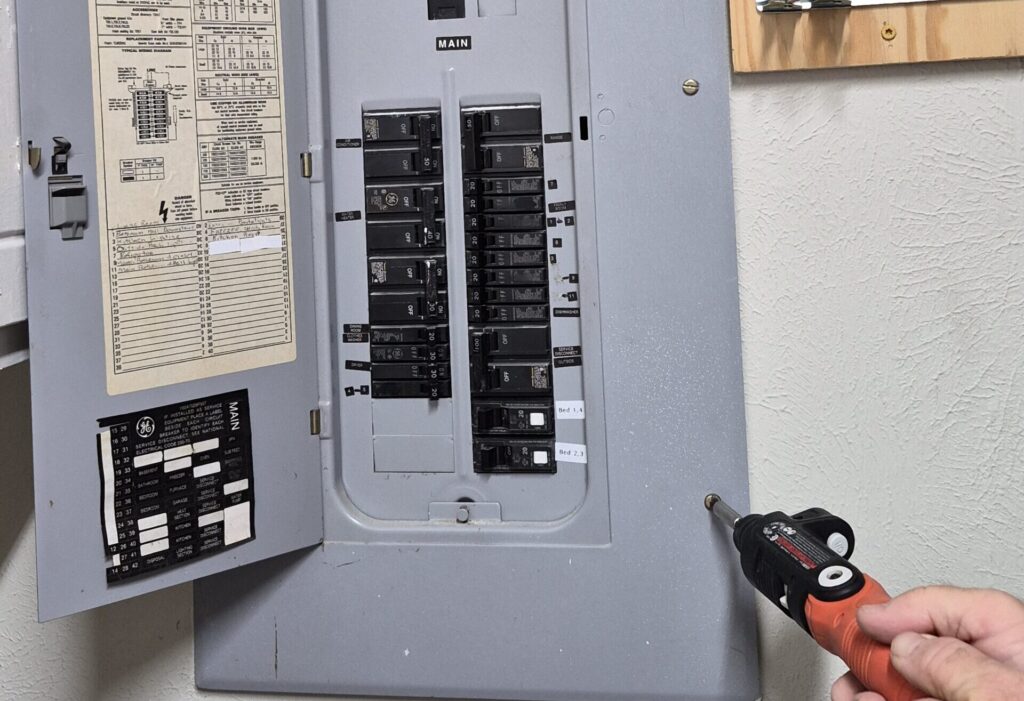
Hands down, the most dangerous part of a home inspection is the electrical panel box. 240 volts with as many as 200 amps is enough to kill a person. The process to inspect this danger is a question of either electrocution or proper execution.
Before opening the door to the panel box, there are safety precautions. Inspectors wear rubber soled boots to reduce conductivity and never stand in water while working in the box. We make sure the dead front has enough room to be taken off safely. There should be a minimum clearance of 30 inches on both sides and 36 inches in front of the panel box. Brushing the back of the hand over the panel door verifies that it is not currently energized. The inspector is now ready to inspect.
To inspect the way the electrical current is distributed throughout the house requires removing the dead front. This is the metal cover. Most panel boxes have six screws to hold the dead front to the box. The box itself is grounded. When one of the six screws is inserted, and touches against a hot wire, it does not usually make contact due to the sheathing. However, the sheathing wears out over years of contact.
Twice in the last seven years, when backing out the screws that adhere the dead front to the box, a loud noise and bright spark flared up! The screw cut through the protective sheathing and electrical current energized the box. Part of the metal screw melted from the intense energy. When inspected, both panel boxes showed the same problem – the hot wires were not arranged to prevent this accident.
Both of the energized panel boxes were old, but it can happen in new homes. Too many people are not careful about the wiring and may cause someone years later to be electrocuted. This is a safety issue on our report. It is noted, photographed, and recommended to be corrected by a professional, licensed, journeyman electrician.
Correct safety execution in the inspection is the key to keep from being electrocuted. We follow a few extra safety protocols such as using plastic coated, battery operated screwdrivers to prevent conductivity. Observing personal safety also keeps our clients safe. Proper execution of the electrical inspection prevents electrocution!